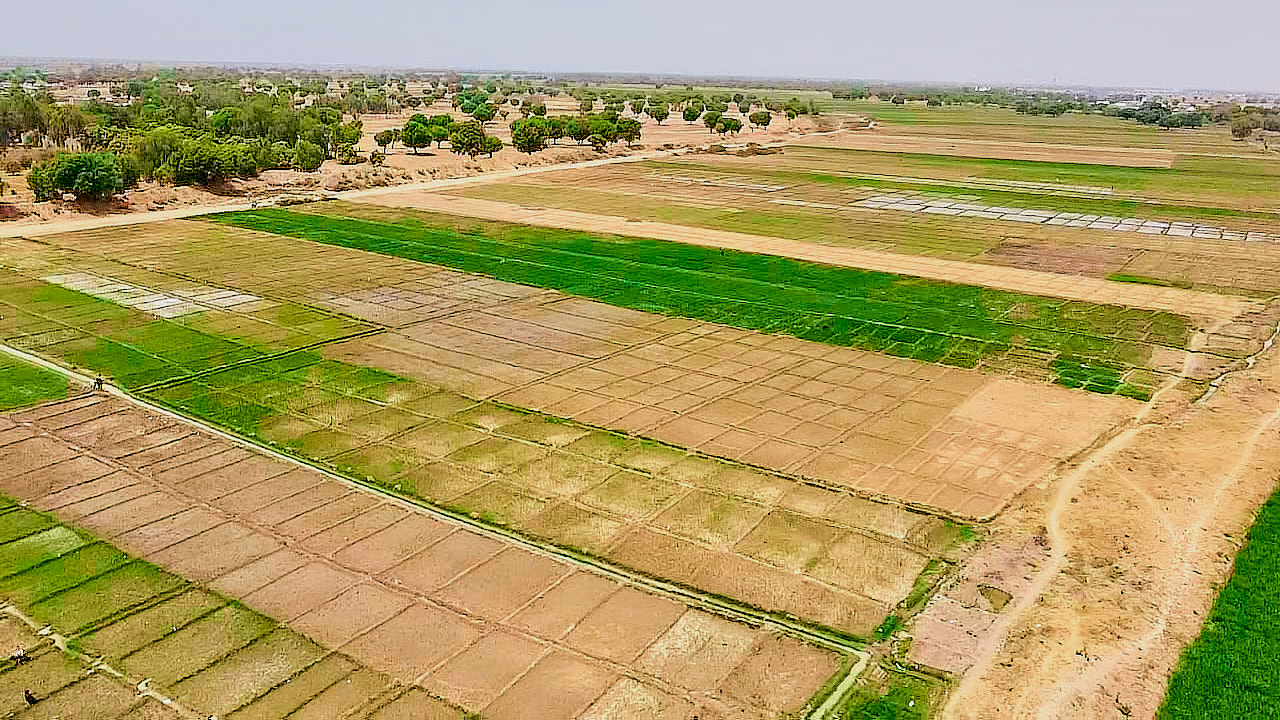
The Commercial Clusters Programme is the flagship initiative under Jigawa-ATA’s Production and Productivity pillar. It represents a bold step toward transforming Jigawa State’s small, fragmented farmlands into large-scale, professionally managed production hubs capable of driving higher yields, economies of scale, and sustained private investment.
Through the cluster model, farmers contribute their land as equity, forming cooperatives or production units that are managed collectively. Each cluster operates as an integrated business ecosystem—combining mechanized production, shared infrastructure, value-added processing, and market linkages—to create viable agri-enterprises that benefit every participating farmer.
 Enhance Farm Productivity: Introduce modern mechanization, improved seeds, and scientific agronomic practices to boost yields across major crop value chains such as rice, wheat, maize, and sesame.
Attract Private Investment: De-risk the sector by consolidating land parcels and developing bankable business models to draw participation from agro-processors, financiers, and investors.
Create Rural Employment: Stimulate job creation in mechanization services, input supply, aggregation, logistics, and processing, especially for youth and women.
Ensure Market Competitiveness: Integrate clusters with structured markets, off-take agreements, and export-compliant quality standards.
Promote Environmental Sustainability: Encourage efficient use of land and water resources through climate-smart practices and integrated soil fertility management.
Enhance Farm Productivity: Introduce modern mechanization, improved seeds, and scientific agronomic practices to boost yields across major crop value chains such as rice, wheat, maize, and sesame.
Attract Private Investment: De-risk the sector by consolidating land parcels and developing bankable business models to draw participation from agro-processors, financiers, and investors.
Create Rural Employment: Stimulate job creation in mechanization services, input supply, aggregation, logistics, and processing, especially for youth and women.
Ensure Market Competitiveness: Integrate clusters with structured markets, off-take agreements, and export-compliant quality standards.
Promote Environmental Sustainability: Encourage efficient use of land and water resources through climate-smart practices and integrated soil fertility management.
Each commercial cluster is designed as a self-sustaining agribusiness ecosystem consisting of:
Farmer Equity Units: Individual farmers contribute their land as shareholding assets and participate as equity partners.
Management Entity: A professional farm management company or cooperative executive oversees day-to-day operations, production planning, and financial management.
Shared Infrastructure: Centralized facilities for irrigation, mechanization services, input storage, produce aggregation, and small-scale processing.
Financial and Market Linkages: Partnerships with banks, NIRSAL, BOA, and private off-takers ensure access to credit, insurance, and guaranteed markets.
Digital Integration: The Jigawa Farmer Information System (JiFIS) and Input Voucher System provide real-time data, traceability, and transparency across the value chain.