The Solar Cluster Irrigation Programme is one of the flagship initiatives under Jigawa-ATA’s Climate Smart Agriculture pillar, designed to promote clean, affordable, and sustainable irrigation solutions for farmers across the state. This programme leverages renewable solar energy to power irrigation systems, enabling all-season farming while reducing dependence on costly and polluting diesel pumps.
Through the establishment of solar-powered irrigation clusters, Jigawa-ATA is ensuring reliable water access for both smallholder and commercial farmers. The initiative integrates innovation, technology, and sustainability to unlock the state’s potential for year-round agricultural production — enhancing food security, income generation, and climate resilience.
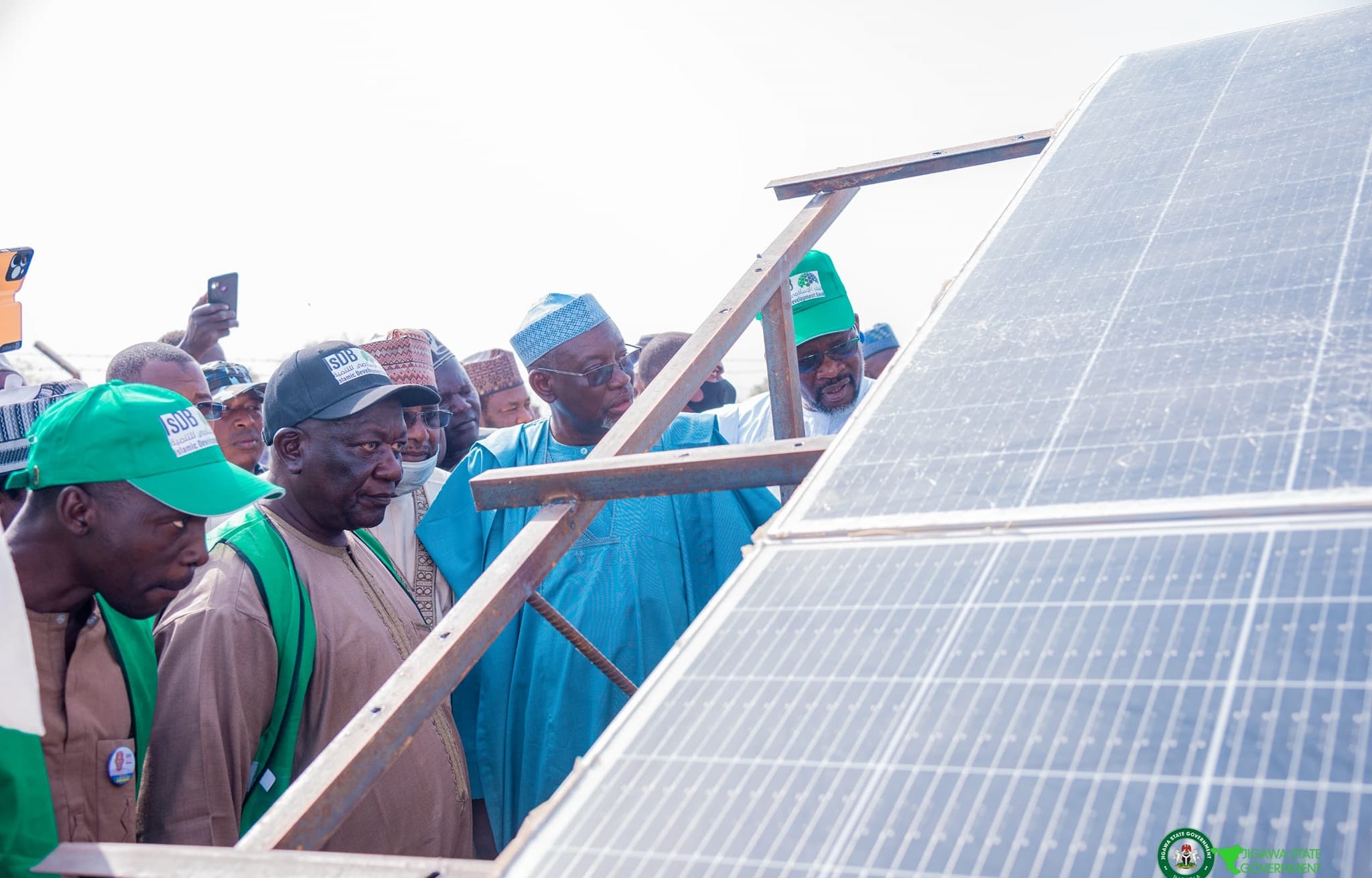
The Solar Cluster Irrigation Programme will lead to expanded irrigated land, reduced production costs, and increased dry-season yields across Jigawa’s farming communities. By transitioning to renewable energy, farmers will experience lower operational expenses and improved profit margins, while contributing to environmental protection and carbon reduction. The initiative will also create new green jobs, foster energy independence, and enhance resilience to droughts and unreliable rainfall. Over time, Jigawa-ATA aims to position the state as a national model for solar-powered, climate-smart irrigation — where technology and sustainability work hand in hand to power agricultural transformation.